


Da Hong Pao: A Guide to China’s Famous Oolong Tea
Discover Da Hong Pao, China's legendary rock oolong tea. Learn about its rich history, unique roast profiles, and how to brew the perfect…
Country, language & currency
The Tea Journal · Brewing Guides · Oolong Tea
By the Tealyra Tea Team · · 5 min read

In short: high mountain oolong (gao shan cha) is a lightly oxidized Taiwanese oolong grown above about 1,000 meters, where cool air and mist slow the leaves down and make them sweeter and more floral. Look for tightly rolled jade-green pearls from named mountains like Ali Shan or Mei Shan. Brew it with water around 195-205°F (90-96°C) and re-steep the same leaves four to six times.
If you have tried a grassy green tea and a malty black tea and want something in between, high mountain oolong is a great next step. It is creamy, flowery and almost never bitter, and one spoonful of leaves keeps giving cup after cup.
Oolong sits between green and black tea: the leaves are bruised and partly oxidized before they are rolled and dried. "High mountain" (gao shan in Chinese) is a Taiwanese term for oolong grown on mountain slopes, usually from about 1,000 meters up to 2,600 meters.
At that height the days are short and cool and the slopes are wrapped in fog much of the year. The tea bushes grow slowly, and slow growth gives thicker, softer leaves with more natural sweetness and aroma. Most high mountain oolong is only lightly oxidized and lightly roasted, so it keeps a green, floral character with a buttery texture.
The leaves are rolled into tight little pearls. When you brew them, they open into whole leaves, often two or three leaves and a bud still attached to the stem. To learn about the wider family, see our complete guide to Taiwanese oolong.
Each mountain has its own climate, and tea lovers can taste the difference. Here are the names you will see most often:
| Mountain | Typical altitude | Flavor profile |
|---|---|---|
| Ali Shan | 1,000-1,400 m | Buttery, sweet, rounded florals; the classic starting point |
| Mei Shan | 1,000-1,500 m | Crisp mountain flowers, creamy and silky, very clean |
| Shan Lin Xi | 1,600-1,800 m | Fresh pine and orchid notes, bright and juicy |
| Li Shan | 1,800-2,600 m | Very fragrant, fruity, long sweet finish; the most sought after |
Our Ali Shan High Mountain is hand-picked and lightly roasted, which adds a deeper, darker floral note to the classic buttery sweetness. Mei Shan High Mountain is greener and brighter, with a creamy texture and a hint of buttered green beans.
When you shop for high mountain oolong, a few signs help you separate a great tea from an average one:
If you enjoy roasted flavors, also try a rock oolong such as High Mountain Qilan Oolong. It grows around 1,600 meters in China's Wuyi mountains and is charcoal-roasted, so it tastes of roasted nuts and orchid rather than fresh flowers. Browse the full range in our oolong tea collection.
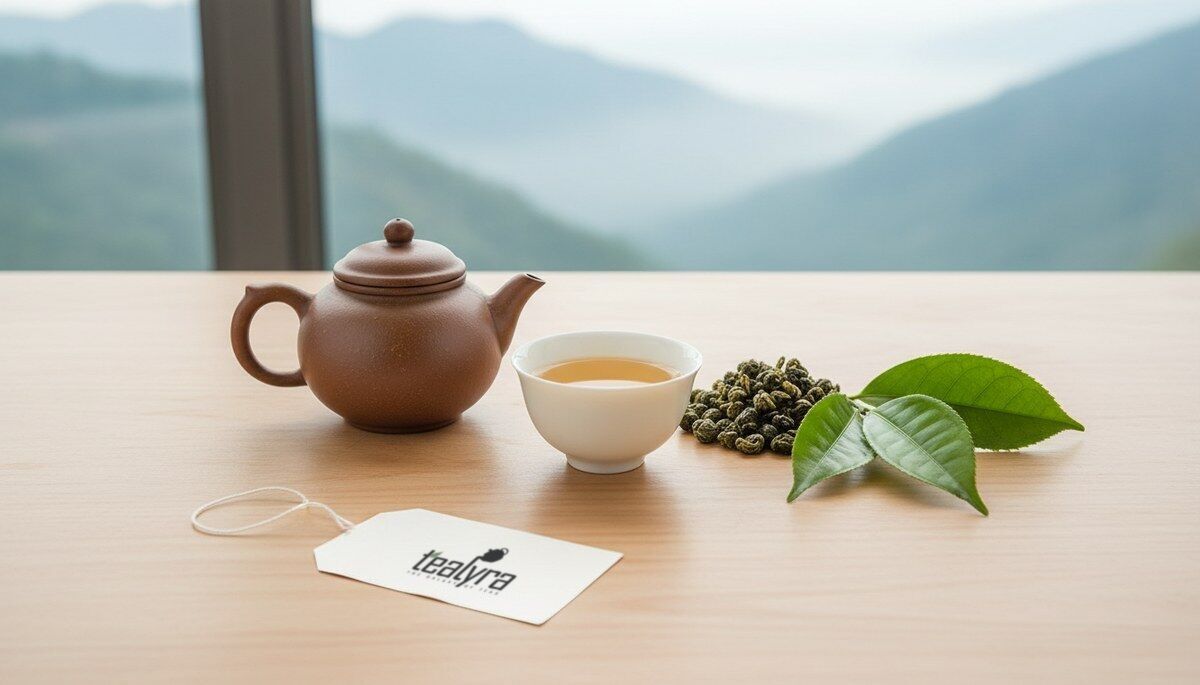
High mountain oolong is forgiving, but it really shines with hot water and short, repeated steeps. Here are two easy methods.
| Method | Leaf | Water | First steep | Re-steeps |
|---|---|---|---|---|
| Gongfu | 5-7 g per 100-150 ml | 195-205°F / 90-96°C | 45-60 s | 4-6, +10-15 s each |
| Western | 3 g per 240 ml | 195°F / 90°C | 3-4 min | 2-3, +1 min each |
A few tips: use fresh filtered water, leave room in the pot for the leaves to open (they grow four to five times in size), and do not leave the leaves sitting in water between steeps.
Lightly oxidized oolong is closer to green tea than black tea, so keep it away from air, light, heat and strong smells. An airtight tin in a cool cupboard works well. For the brightest floral aroma, enjoy it within about 6-12 months of opening.
Ali Shan is one type of high mountain oolong. "High mountain" covers several Taiwanese growing areas above about 1,000 meters, including Ali Shan, Mei Shan, Shan Lin Xi and Li Shan, and each has its own flavor.
Yes. Like all teas from the Camellia sinensis plant it contains caffeine, usually somewhere between green and black tea per cup. Short gongfu steeps give smaller amounts in each small cup.
The bushes grow slowly in cool weather, yields are small, and the leaves are usually hand-picked on steep slopes. You also get many infusions from one serving, so the price per cup is lower than it looks.
Yes. Put 8-10 g of leaves in 1 liter of cold filtered water and leave it in the fridge for 8-10 hours. The result is sweet, floral and very smooth.
Discover Da Hong Pao, China's legendary rock oolong tea. Learn about its rich history, unique roast profiles, and how to brew the perfect…

Discover the true art of iron guan yin tea. Explore its orchid aroma, Anxi craft, floral and roasted styles, plus essential brewing tips…

Osthamus flower oolong tea. Discover what osmanthus flower oolong tea is, its unique flavor, how to brew it perfectly, and expert pairing…